01
The jack
Every end starts with the white target ball, called the jack. Players then aim their red or blue balls as close to it as possible.
The sport
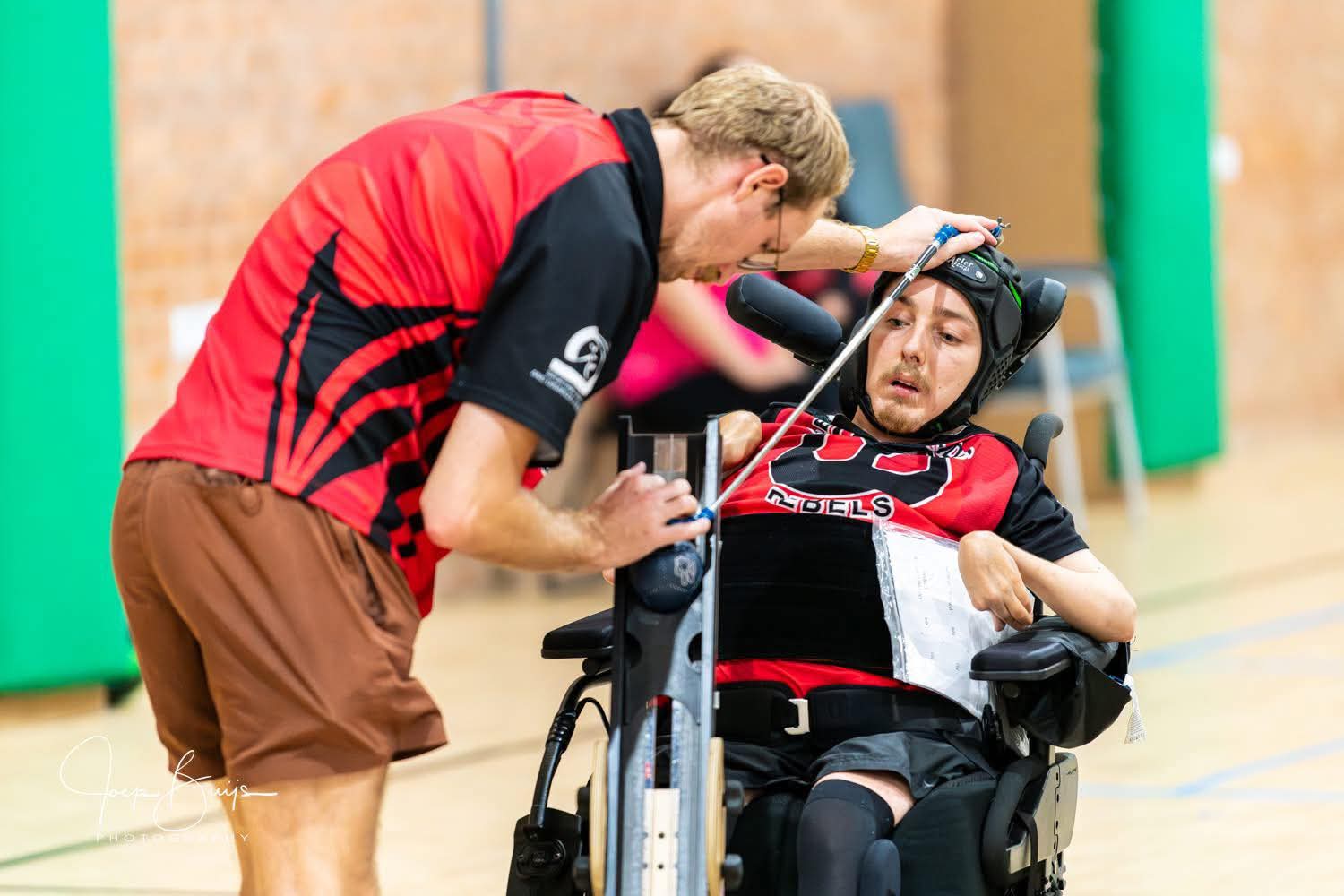
Pronounced bot-cha. A seated precision sport invented for athletes with high support needs, now a Paralympic fixture with no Olympic twin.
01
Every end starts with the white target ball, called the jack. Players then aim their red or blue balls as close to it as possible.
02
Each side has six balls. At the end, the side with the ball closest to the jack scores one point, plus an extra point for every additional ball closer than their opponent’s nearest ball.
03
Singles and pairs matches are generally played over four ends, while team matches are played over six. Boccia is a game of patience and strategy — placement often matters more than power.
04
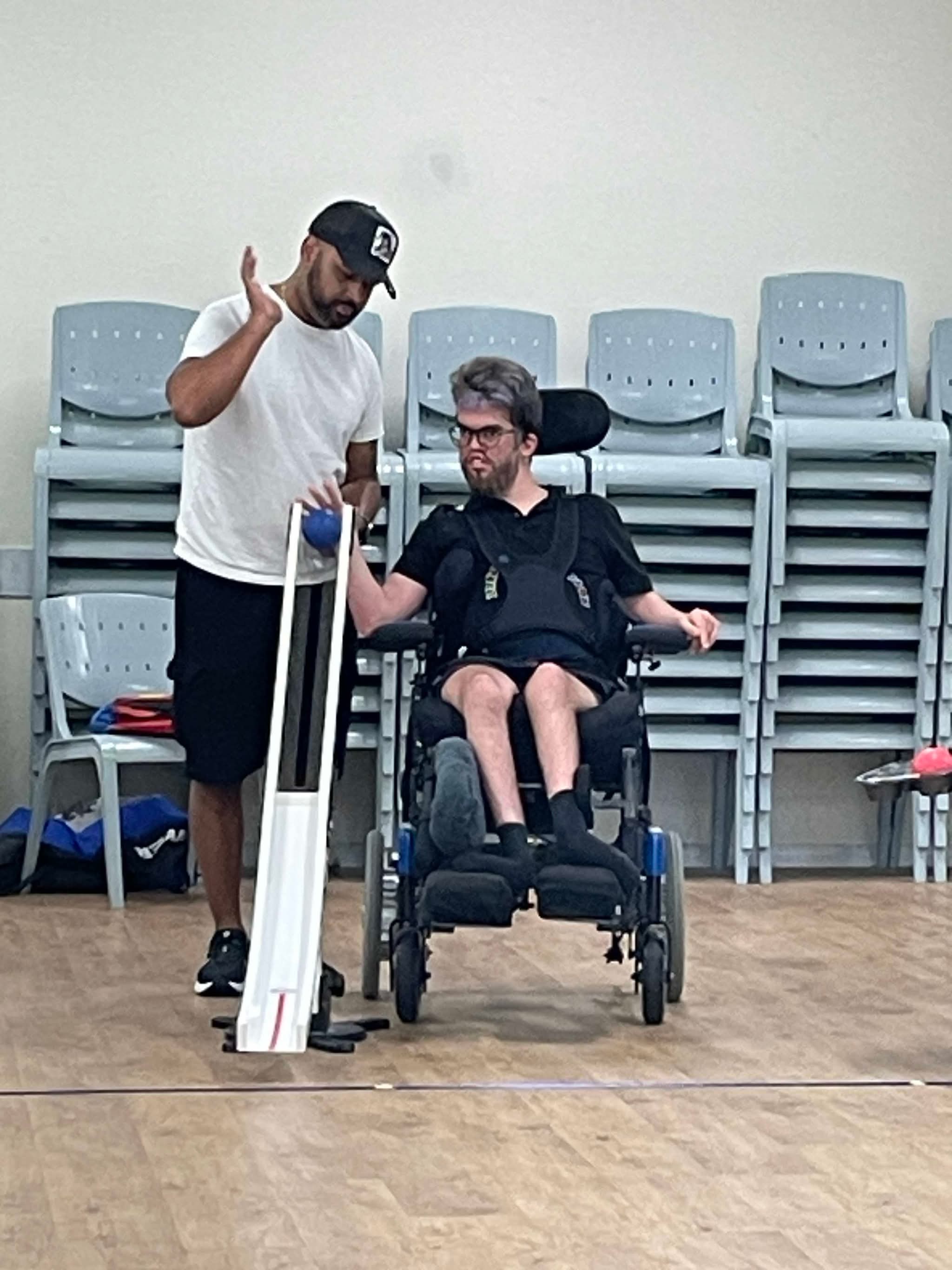
Players can throw, roll or use a ramp to send the ball onto the court. Ramp players may direct a sport assistant to position the ramp, but the athlete remains in control of every shot.
Classifications
Classification is how boccia stays fair. You do not need a class to come on Sunday. If you want to compete, we help you find the right one.
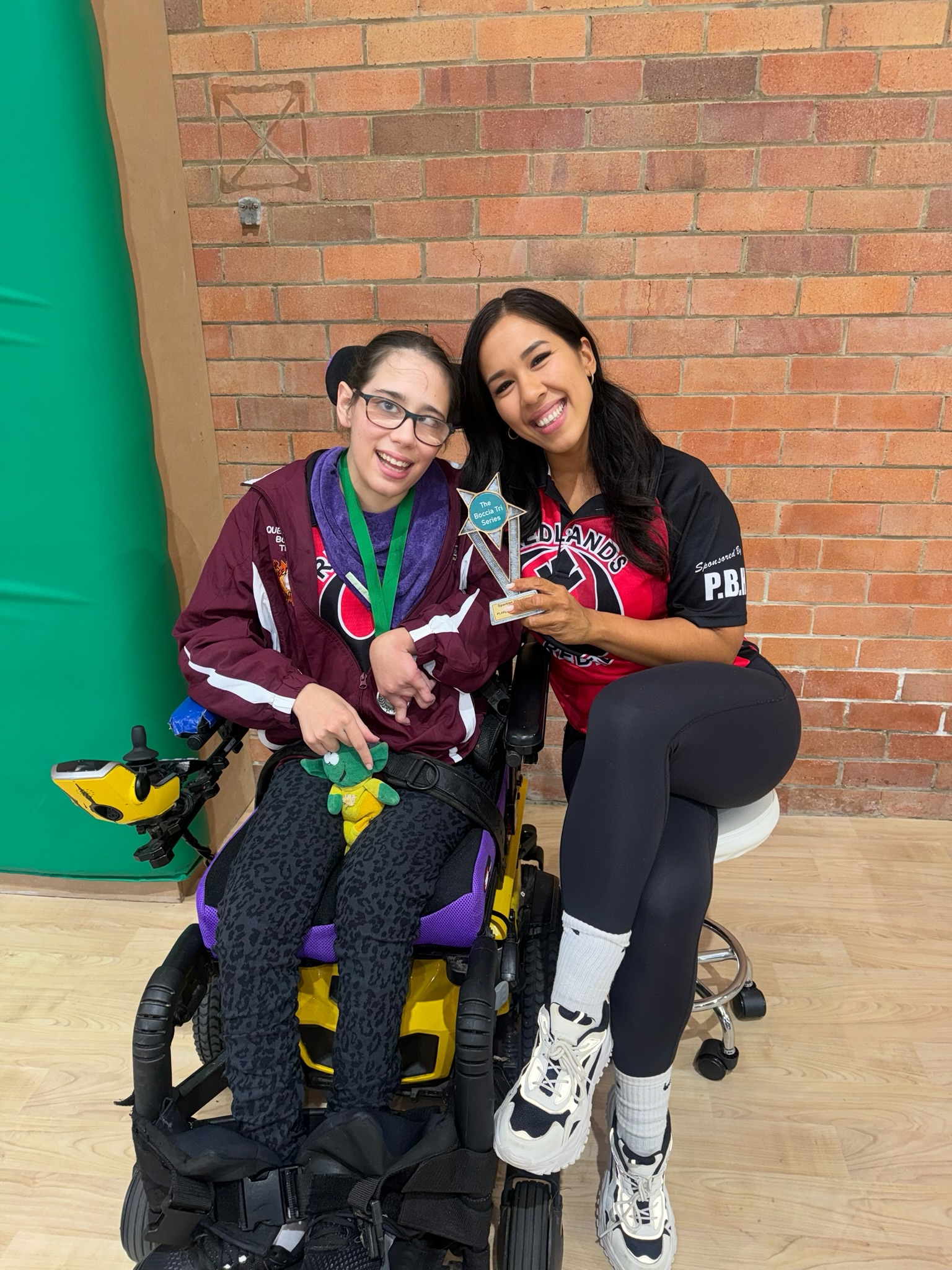
Club sessions are the start. Sanctioned competitions, state teams, and Boccia Australia events sit further along the same road. Rebels already walk it. You can too — or you can just keep coming on Sunday. Both count.
Start this Sunday